NIKHEDONIA
Mathematics · Algorithms · Engineering
Distributed Systems··10 min read
Raft & Viewstamped Replication: Consensus Visualized
An interactive deep-dive into two landmark distributed consensus algorithms — Raft and Viewstamped Replication — with live simulations you can explore and break.
Also In This Issue
Automatic Differentiation
A deep-dive into automatic differentiation: symbolic vs. numerical vs. AD, AST transformation, dual numbers, tapes, hybrid methods, and a generic C++ implementation that computes gradients and solves optimisation problems.
Detecting Hallucinations in LLM Summaries
LLMs write convincingly but fabricate facts. A practical tour of automated detection techniques: BERTScore, embedding similarity, ROUGE/n-gram overlap, NER-based cross-referencing, and QAEVAL.
React vs SolidJS: Dynamic Graphs, Static Graphs, and the Price of Flexibility
React and SolidJS share JSX syntax but are built on fundamentally different computational models. Understanding why illuminates a much older tension in functional programming — and an eerily similar split that once divided PyTorch from TensorFlow.
◆ Interactive Feature
EML: One Operator Is All You Need
How a single binary operator — eml(x,y) = exp(x) − ln(y) — can generate every elementary function a scientific calculator knows, from addition to trigonometry.
Read full article →Interactive Features
EML: One Operator Is All You Need
How a single binary operator — eml(x,y) = exp(x) − ln(y) — can generate every elementary function a scientific calculator knows, from addition to trigonometry.
9 min readThe Challenges of WebGL
WebGL lets you run shaders in the browser — and that's genuinely magical. But using it for arbitrary GPU computation quickly reveals a thicket of constraints that OpenCL and WebGPU were designed to escape.
12 min readThe Bertrand Paradox: When Randomness Needs a Definition
A deceptively simple question — what is the probability that a random chord of a circle is longer than the side of its inscribed equilateral triangle? — has three different correct answers depending on what 'random' means.
6 min readWhy Tuning a Piano is Mathematically Impossible
Perfect harmony is a mathematical impossibility. Here's the beautiful, maddening reason why — and how piano tuners have learned to live with it.
9 min readFrom Regex to Automata to Generators
How regular expressions compile to deterministic finite automata — with an interactive visualizer, a DFA-powered string generator, and a note on closing the loop with property-based testing.
9 min readThe Fourier Transform: From Sines to Signals
A visual and mathematical journey through one of the most beautiful ideas in all of mathematics — decomposing any signal into its frequency components.
3 min readFuzzy Search: Typos, Tries, and the Algorithms Behind Instant Results
A deep dive into how fuzzy search works — from edit distance and tries to stemming, BK-trees, and how Lucene/Elasticsearch find typo-tolerant matches at scale.
11 min readPerfect Hash Functions: Collision-Free by Design
A deep dive into perfect hash functions — what they are, why they matter, how to find one efficiently with parallel search, and how they compare to JavaScript's built-in Map.
8 min readFrom DIY Monorepo to Nx: Lessons from a White-Label Credit Card Platform (2024)
Part 2 of a multi-year migration case study. After building a homegrown monorepo toolchain, we adopted Nx — and discovered that its opinionated approach solves some problems elegantly while creating new ones when your apps can't truly be isolated.
11 min readFrom Legacy to Monorepo: Migrating a White-Label Credit Card Platform (2021–2024)
A four-year case study of migrating a white-labeled credit card platform from a legacy Angular/C# stack to a React monorepo with single-spa — covering GraphQL BFFs, micro-frontends, build parallelization, and the people problems that matter more than the tech ones.
18 min read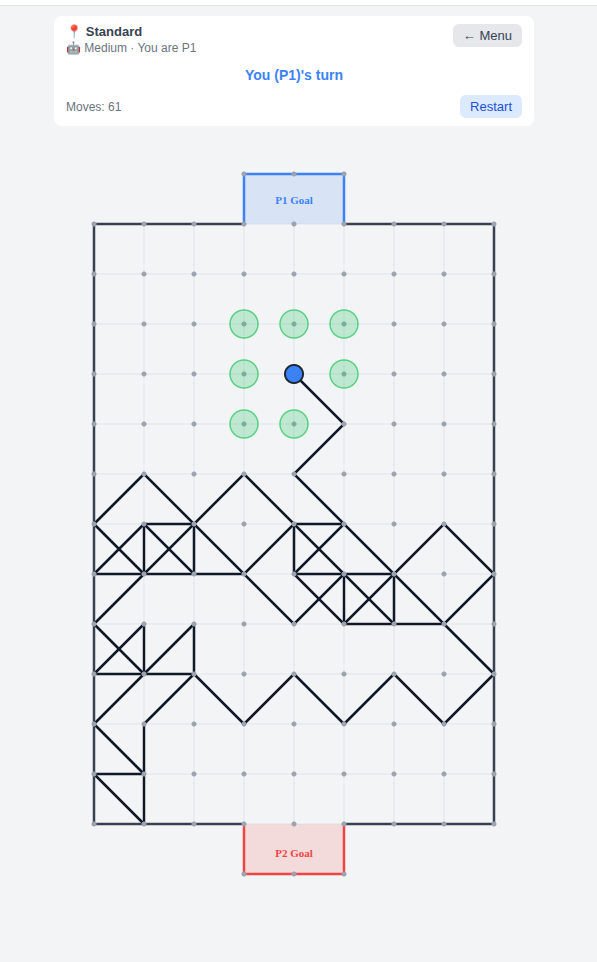
A turn-based game born from pen-and-paper lectures. Draw lines to move the ball into your opponent's goal — bouncing off walls and previous lines makes every match more chaotic than the last.
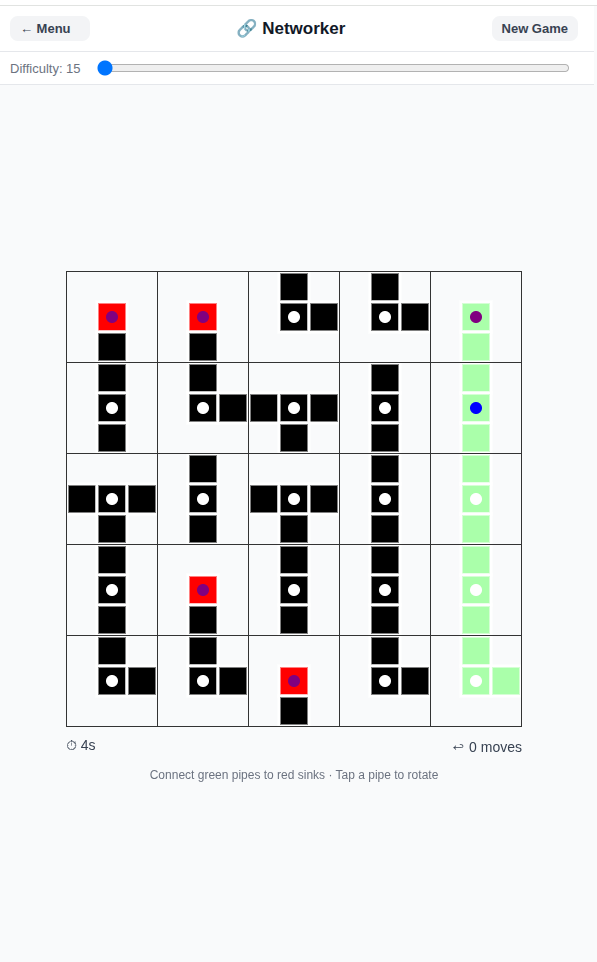
A pipe-rotation puzzle inspired by graph theory. Connect all sources to all sinks by rotating segments. Puzzles are procedurally generated via a maze-like algorithm.
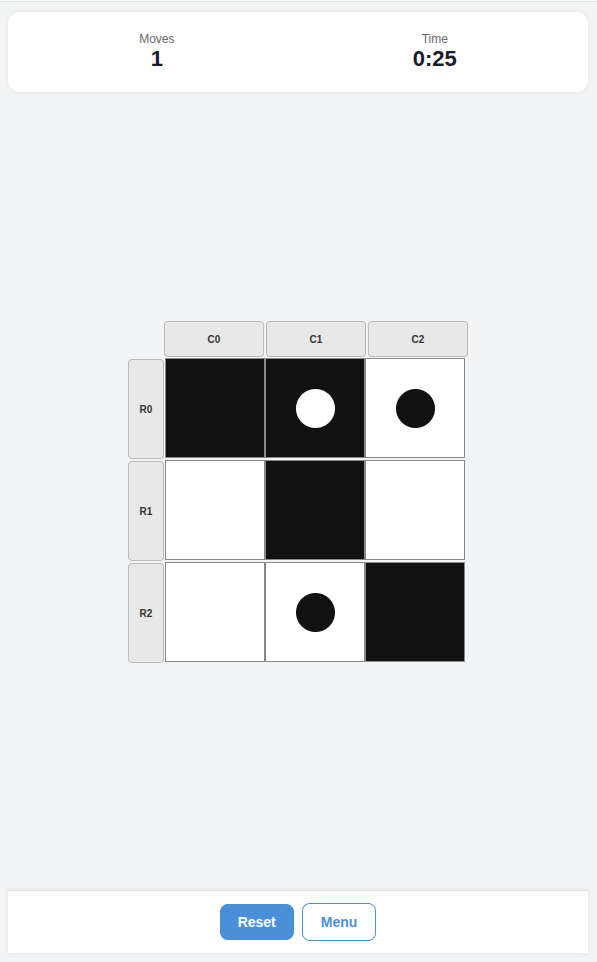
Matrix inversion in disguise. Reduce the grid to the identity using elementary row operations — without realising you're doing linear algebra.
Optimizing CI Builds with Docker Layer Caching on TeamCity
How we cut build times from 45 minutes down to 3–10 minutes on an on-premise TeamCity cluster using multistage Docker builds, content-addressed cache keys, and shared filesystem volumes — plus what modern BuildKit unlocks today.
buckaroo.pm - Find C++ packages
A companion website for the Buckaroo package manager — browse ~400 C++ packages from GitHub, explore the dependency graph, and find what you need instantly with precompiled fuzzy search.
Buckaroo: Conflict-Driven Dependency Resolution for C++
How Buckaroo's dependency resolver borrows ideas from SAT solvers — using conflict-driven clause learning to prune the search space and resolve C++ packages blazingly fast.